Technology Innovation

Technology Innovation

HL D&I Halla operates a strategic implementation framework designed to maximize customer value by leading technology-driven innovation in construction amid a paradigm shift led by drones, robotics, AI, and other advanced technologies. The Company concentrates its R&D capabilities across a broad spectrum, ranging from practical support technologies that enhance on-site productivity to smart ICT convergence technologies that will determine its future competitiveness. In particular, HL D&I Halla incorporates the social priorities of carbon neutrality and enhanced safety into its technological innovation efforts, taking the lead in creating sustainable value beyond conventional construction.

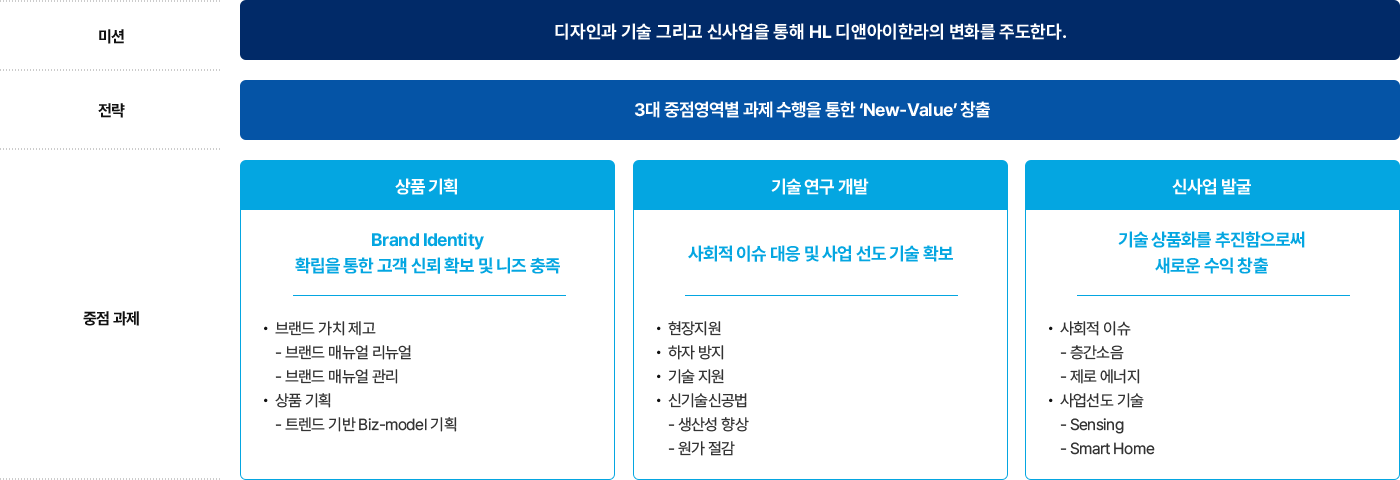
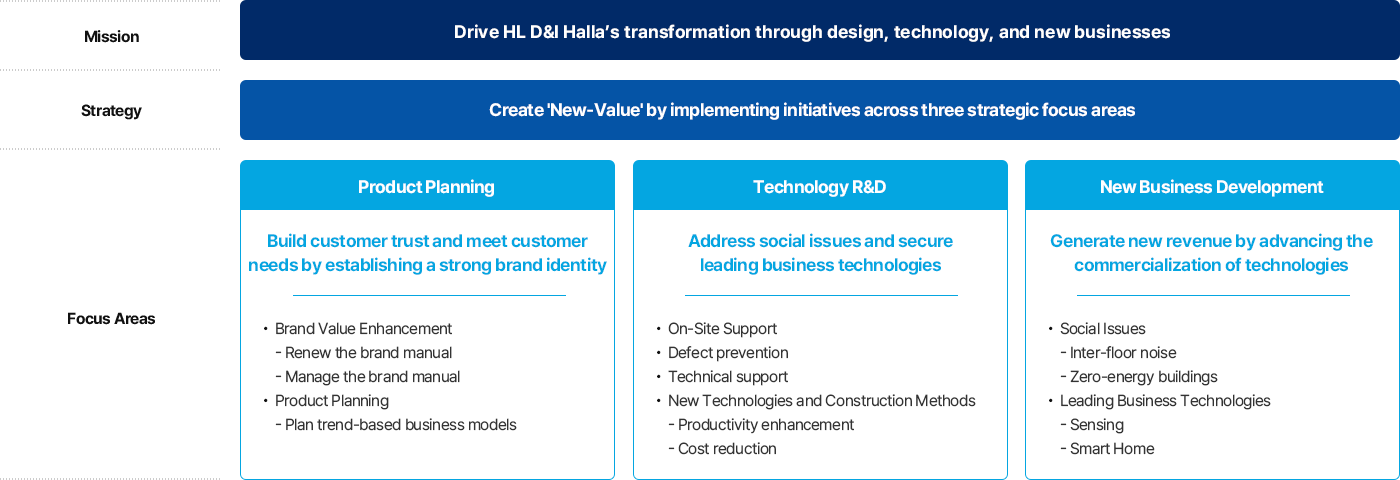
HL D&I Halla’s Technology Innovation Mission and Strategy

Disaster Safety Technology

Earth-Retaining Wall Construction Technology

HL D&I Halla continuously develops and applies safety technologies to prevent disasters and minimize safety risks at construction sites. In 2025, the Company obtained disaster safety new technology certification for its “Earth-Retaining Wall Construction Technology Using Steel-Plate-Embedded PHC Piles.” This technology uses PHC piles fabricated with embedded steel plates, making it easier to install walers1) without the separate chamfering process2) required under conventional construction methods. In addition to significantly improving construction efficiency, the technology fundamentally prevents risks associated with the separation of walers caused by deterioration in wall construction quality, thereby minimizing the possibility of safety incidents. HL D&I Halla will continue to actively introduce verified new technologies at its sites to create accident-free construction environments with assured structural stability.

1) Waler: A horizontal supporting member installed to resist earth pressure on an earth-retaining wall and ensure structural stability together with struts

2) Chamfering process: The process of removing or finishing sharp corners of a structural member at a specified angle

Smart Pedestrian Safety System

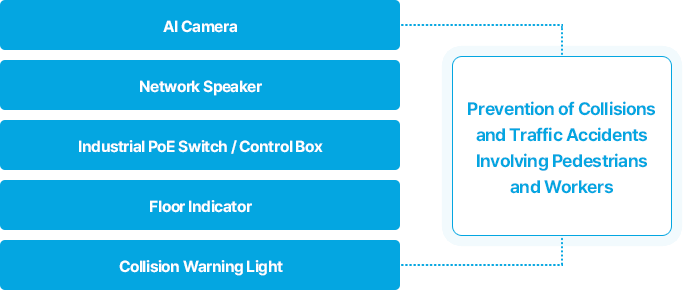
In response to changes in the pedestrian environment, including the growing number of pedestrians walking while looking at smartphones, HL D&I Halla has developed an intelligent safety system to prevent accidents. When a vehicle approaches, floor signal lights installed along the boundary between the sidewalk and the roadway automatically illuminate in red to alert pedestrians. By providing an intuitive visual warning, the system temporarily restricts pedestrian movement and effectively helps prevent collision accidents. In the first half of 2026, the Company completed the installation of the system for a proof of concept (PoC) at the gate of a designated EFETE construction site in Seongnam. The system combines AI cameras, network speakers, industrial PoE switches, and control boxes to help protect workers and pedestrians. HL D&I Halla plans to carefully analyze data collected during the three-month PoC, verify the effectiveness of the system, and actively consider expanding it to all construction sites and smart residential complexes.

Configuration of the AI-Based Intelligent Floor Signal System
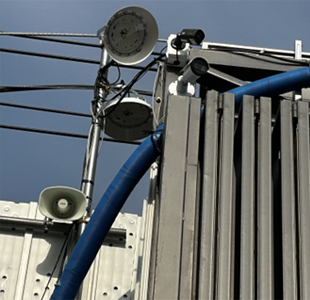
AI Camera and Network Speaker
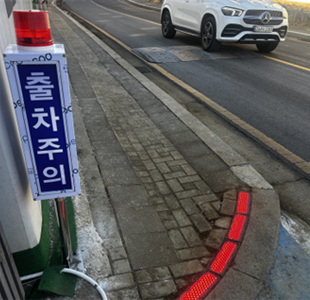
Floor Signal Light and Warning Light

Smoke Control System for Electric Vehicles

In response to the increasing adoption of electric vehicles, HL D&I Halla developed an electric vehicle smoke control system to proactively address fire risks in underground parking facilities. The system was designed in consideration of the characteristics of electric vehicle fires, in which large quantities of smoke and toxic substances spread rapidly. Its performance in delaying the spread of smoke by at least six minutes has been verified. The system not only secures golden time for the safe evacuation of occupants during the early stages of a fire, but also plays a key role in supporting the fire brigade’s initial response. During the relocation of the Company’s previous site office, the smoke control system showed a smoke spread delay of at least six minutes when operating independently and at least ten minutes when operated in combination with sprinklers. In 2024, fire dampers1) were additionally applied in line with strengthened regulatory requirements to further enhance safety. The system is currently being installed at the relocated site. HL D&I Halla plans to conduct an independent smoke test scheduled for 2027 to complete the final verification of evacuation visibility performance. The Company will then expand the system across all business sites to create an accident-free environment that protects customers’ lives and property.

1) Fire damper: An automatic shut-off device installed in ventilation and HVAC ducts to prevent flames or smoke from spreading through air passages to other areas during a fire

Comparison of Smoke Spread Delay Effects of the EV Smoke Control System
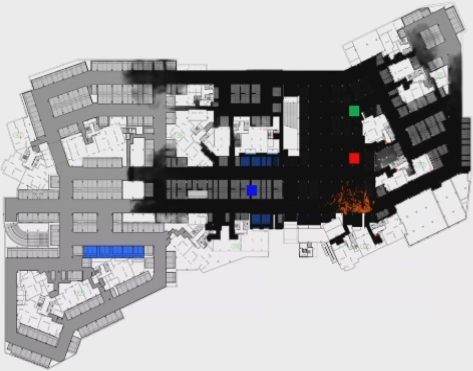
[Before] Smoke Control System Not in Operation
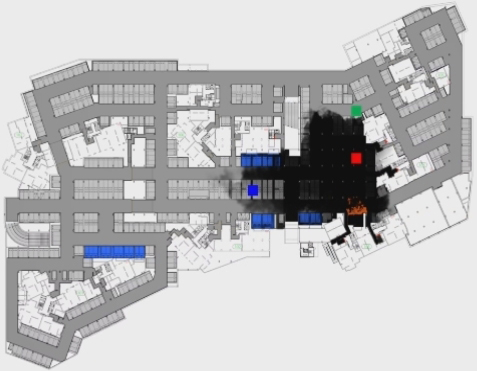
[After] Smoke Control System in Operation

*Conditions nine minutes after the outbreak of a fire

Inter-Floor Noise Reduction Technology

Application of Inter-Floor Noise-Reducing Flooring

HL D&I Halla is conducting continuous on-site testing and technology research to proactively respond to strengthened inter-floor noise regulations for apartment housing and to innovate residential quality. Inter-floor noise measurements at a completed apartment complex confirmed an average noise level of 44 dB across all units, below the statutory limit of 49 dB under the Housing Act. However, although all units met the legal standard, some received a heavy-impact noise grade below the Company’s target Grade 3. Accordingly, HL D&I Halla is developing a high-performance floor structure aimed at achieving Grade 2 heavy-impact noise performance of 40–43 dB or lower. Through this initiative, the Company will improve inter-floor noise reduction performance, conduct pilot construction, and establish standard construction methods based on performance measurement results. HL D&I Halla will continue to build its technological competitiveness and provide inter-floor noise reduction solutions that meet customer expectations and social demands, thereby creating high-quality residential environments.

Process for Applying Inter-Floor Noise-Reducing Flooring

When a Change
Is Required
Step 1

Determine Whether the Flooring Structure Should Be Changed

  • Review performance, constructability, cost, and construction schedule requirements
  • Confirm on-site performance
Step 2

Select an Alternative Flooring Structure

  • Review and discuss a high-performance flooring structure for noise reduction
Step 3

Conduct an On-Site Sample Test

  • Install a sample of the alternative flooring structure
  • Conduct on-site performance measurement and verification tests
Step 4

Establish Guidelines and Apply the Standard Construction Method

  • Present compliance requirements and guidelines to ensure on-site performance
  • Carry out standard construction and quality control
Best Practice

Introduction of a Simplified IoT-Based Inter-Floor Noise Measurement Method

HL D&I Halla developed a simplified IoT-based inter-floor noise measurement method that uses lighter measuring equipment and reduces the number of personnel and time required for measurement, thereby innovating the efficiency of on-site quality management. Under the existing inter-floor noise post-construction verification system, there was a risk of additional after-sales service costs and construction delays if units failed to meet performance standards prior to occupancy. In 2025, the Company used the newly developed technology to conduct comprehensive inspections of all units at the applicable sites, enabling it to address factors causing performance shortfalls in advance. In recognition of this technological excellence, HL D&I Halla received the Association President’s Award at the 18th Construction Technology R&D Best Practice Conference, demonstrating the technology’s external credibility. In December 2025, the Company signed a tripartite agreement with Doosan E&C to accumulate data from a wider range of construction sites and enhance the precision of the technology. HL D&I Halla plans to build foundational data to improve measurement accuracy by applying the technology at sites subject to the inter-floor noise post-construction verification system. The Company will also provide the data as reference material when supplying technology to other construction companies, thereby helping mitigate inter-floor noise risks across the construction industry.

Smart Construction Technology

Unmanned Drone-Based Automation System

HL D&I Halla is advancing the introduction of an unmanned drone-based automation system as part of its smart construction initiatives. By automating repetitive tasks that have conventionally relied on manual work, the system reduces the workload of personnel, improves the accuracy of data records, and minimizes omissions and errors that may occur during handover processes, thereby enhancing operational continuity and stability. In particular, the system enables scheduled autonomous flights and data collection and is expected to serve as an innovative management tool not only at construction sites but also in the maintenance of facilities such as golf courses. The Company is currently preparing a proof of concept at one business site and plans to assess operational efficiency and analyze Voice of Customer feedback before considering expansion to all sites.

Drone Surveying Technology

HL D&I Halla uses drone surveying technology to precisely identify site conditions, including land boundaries, during the early stages of construction and to proactively manage major risks throughout the construction process. By deploying automated flight and imaging systems at sites, the Company fundamentally prevents human error that may occur during surveying and enhances the accuracy and reliability of site management through high-precision image data. As a result, demand for drone surveying and the scope of its application continue to expand. HL D&I Halla plans to broaden the field application of unmanned drone technology, optimize its data-driven analysis and reporting framework, and accelerate innovation in digital transformation and smart construction management.

Process for Applying Drone Surveying Technology at Construction Sites

Step 1

Before Site Opening and During the Initial Stage

  • Compare and analyze actual land boundary conditions against drawing information to identify discrepancies
Step 2

After Site Opening

  • Survey initial site conditions to verify road-boundary encroachment and interference with existing infrastructure
Step 3

During Construction

  • Review missing or defective work during structural construction involving reinforcing steel and concrete
Step 4

After Completion

  • Verify landscaping, auxiliary facility placement, and other completed conditions
Best Practice

Exterior Wall Inspection Using Autonomous Drones

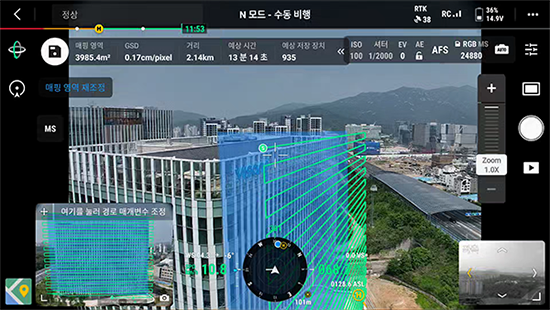
HL D&I Halla is introducing a drone-based inspection system to improve the precision of exterior wall inspections and proactively prevent construction defects. In particular, the Company applies a vertical autonomous trajectory flight method in which drones fly at predetermined intervals and speeds along established routes. This approach enables the collection of systematic and detailed exterior wall data beyond the limitations of manual inspections. In 2025, the Company partnered with a specialized drone exterior-wall crack inspection company to prepare the technology for application at actual construction sites. When introduced, the system will use AI solutions to accurately diagnose defects such as exterior wall cracks and paint peeling, thereby reducing finishing defects at building sites and improving construction quality. Autonomous drone inspections are expected not only to substantially reduce inspection time and cost compared with conventional methods, but also to eliminate safety risks associated with work at height. HL D&I Halla plans to gradually expand the technology across all construction sites and further strengthen its data-driven smart quality management system.

Expected Benefits of Exterior Wall Inspection Using Autonomous Drones

Performance Indicators Expected Benefits
[Quality] AI-based Defect Detection Accuracy Improve the reliability of exterior wall quality by detecting defects, including microcracks, with high accuracy
[Efficiency] Reduction in Inspection Time Reduce inspection time compared with conventional manual inspections
[Cost] Optimization of Quality Management Costs Reduce follow-up repair costs and improve inspection-process efficiency by preventing defects and optimizing quality management expenses
[Safety] Reduction in High-risk Tasks Fundamentally prevent fall risks by replacing workers performing exterior wall inspections at height with drones

AI and Robotics Technologies

‘DivotFiX’, an Autonomous Golf Course Turf-Repair Robot

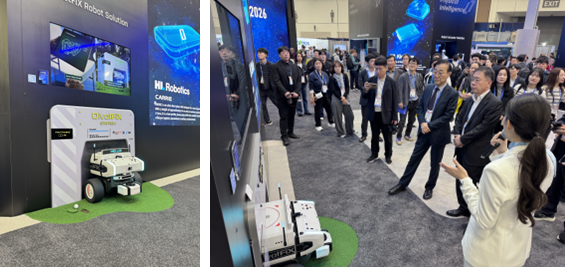
During a drone technology proof-of-concept project for a new golf-course maintenance business, HL D&I Halla identified demand for an unmanned maintenance robot and developed DivotFiX, an autonomous AI-based turf-repair robot. DivotFiX is an intelligent robot that automatically detects and precisely repairs divots—damaged areas of turf—on golf-course fairways. It integrates AI-based damage analysis and optimal route-planning technologies. The Company has also incorporated a nighttime unmanned operation system, overcoming time constraints on operation while fundamentally eliminating safety risks for workers. Through DivotFiX, HL D&I Halla aims to maximize the efficiency of maintenance operations and further strengthen its new-business portfolio based on robotics technology. DivotFiX was exhibited at CES 2026, where it received strong feedback and won Innovation Awards in two categories.

DivotFiX

‘PARKIE’, an Autonomous Parking Robot

HL D&I Halla plans to introduce PARKIE, an autonomous parking robot, at the parking facility of the Cheonan Buseong Halla Vivaldi apartment complex in August 2026. This will mark the first deployment of an autonomous parking robot at an occupied residential complex in Korea under the regulatory sandbox program. PARKIE is the world’s first autonomous parking robot to adopt the Autonomous Mobile Robot (AMR) method. In April 2026, HL D&I Halla submitted a preliminary application for the regulatory innovation robot demonstration project to support its introduction. PARKIE features advanced indoor autonomous-driving technology that independently identifies obstacles and travel routes without separate guide infrastructure such as QR codes, magnetic lines, or rails. Unlike conventional systems that simply stop upon detecting an obstacle, PARKIE identifies surrounding obstacles, vacant spaces, and travel paths, and moves vehicles by determining the distance between the wheels and the center of the vehicle. This substantially enhances operational safety while minimizing the cost of maintaining additional infrastructure, thereby ensuring economic feasibility. The advanced parking system not only maximizes user convenience, but also contributes to preventing parking accidents such as door dings and resolving conflicts among residents caused by illegal parking. Through PARKIE, HL D&I Halla is pursuing multifaceted improvements to residential environments, including enhanced mobility for transportation-vulnerable users.

PARKIE Autonomous Parking Robot

AI-Based Low-Noise Waste-Heat Recovery Hood System

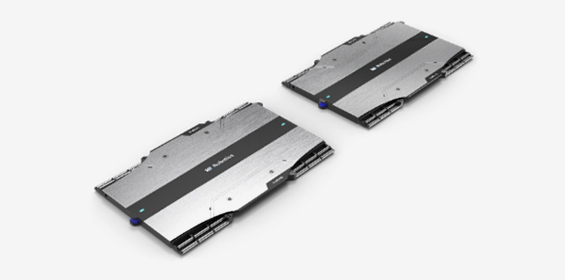
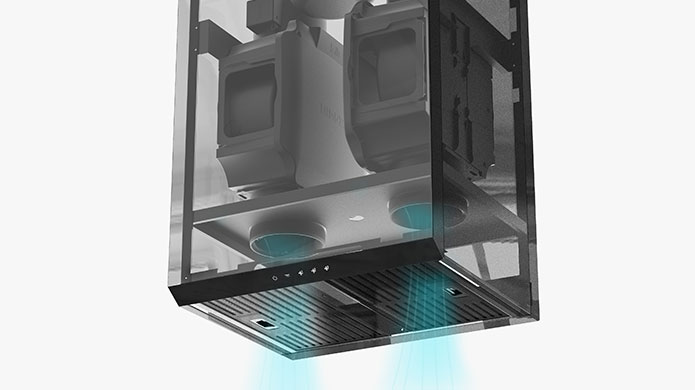
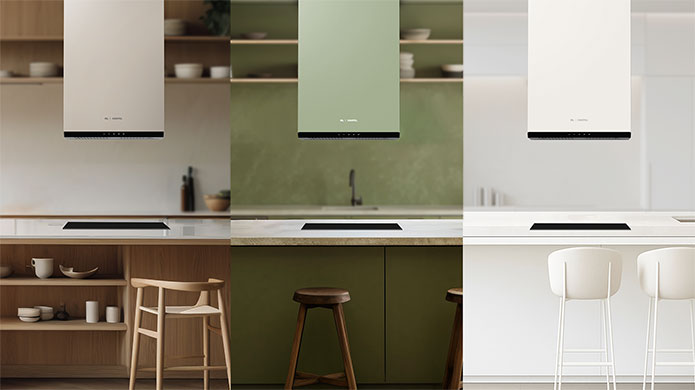
HL D&I Halla is enhancing the technological completeness of residential spaces through an AI-based low-noise waste-heat recovery hood system that recovers heat energy lost during kitchen ventilation and continuously manages indoor air quality. The system recovers high-temperature waste heat discharged during cooking through an internally installed plate-type heat exchanger and reuses it to heat incoming supply air, significantly reducing heating energy loss. It is regarded as a technology capable of maximizing energy efficiency in apartment housing and proactively responding to zero-energy building policies. In addition, an automatic control system connected to AI air-quality sensors calculates airflow optimized for the real-time cooking environment. Dual-fan and constant-air-volume technologies enable quiet operation equivalent to a library, simultaneously delivering energy savings and improved residential satisfaction. HL D&I Halla plans to establish this technology as a standard model for apartment housing and lead the future of sustainable smart residential platforms.

AI-Based Low-Noise Waste-Heat Recovery Hood System

AI House

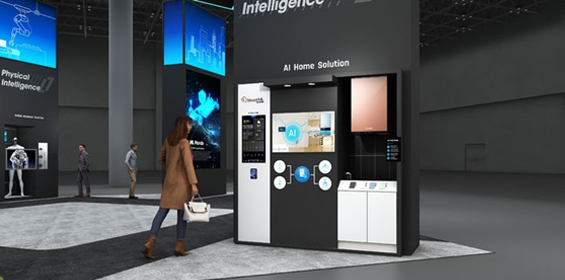
Based on its proprietary smart home platform, touchHL, HL D&I Halla is introducing AI House, which provides integrated management across the entire residential space. AI House is an integrated, AI-powered residential ecosystem that organically combines a range of digital technologies. It connects innovative solutions—including AI smart mirrors, AI lighting based on zero-energy building technology, and HL AI hoods—to IoT sensors and home appliances, thereby providing a seamless residential environment. All services are operated through the touchHL AI Platform, which learns users’ behavioral patterns and automatically optimizes temperature, lighting, and air quality to deliver a personalized environment. In particular, the conversational wellness system based on an AI LLM, which is being developed jointly with partner companies, is expected to serve as an intelligent hub that transforms conventional passive controls into intuitive and interactive experiences. HL D&I Halla will continue to innovate residential spaces through AI technologies, maximize energy efficiency, and realize a human-centered smart lifestyle.

touchHL AI House

Best Practice

Winning CES 2026 Innovation Awards

At CES 2026, the world’s largest IT and consumer electronics exhibition, HL D&I Halla achieved the distinction of receiving four Innovation Awards for DivotFiX, its autonomous turf-repair robot, and touchHL AI House, its smart residential platform. During the exhibition, prominent political and business figures visited the Company’s booth and highly evaluated its differentiated construction robotics solutions. Coverage by major global media outlets further showcased HL D&I Halla’s innovation capabilities worldwide. The awards represent the culmination of the Company’s digital transformation efforts to integrate AI and robotics with conventional construction technologies. HL D&I Halla will continue to lead intelligent residential technologies and smart solutions and consistently create differentiated customer value.

  • DivotFiX

    Innovation Award in the Robotics Category
    Innovation Award in the Advanced Mobility Category

  • touchHL AI House

    Innovation Award in the Mobile Devices, Accessories & Apps Category
    Innovation Award in the Smart Home Category

Enhancing Brand Value

Publication of the ‘EFETE Color Manual’

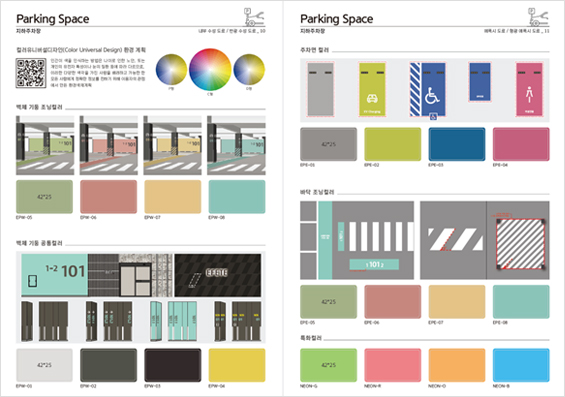
HL D&I Halla published the EFETE Color Manual to establish a distinct spatial identity for the EFETE brand by systematically defining proprietary colors applied throughout apartment interiors and exteriors, underground parking facilities, and communal spaces within residential complexes. The manual closely analyzes road characteristics and the functions of individual spaces and presents corresponding color systems. Its purpose is to provide residents with a consistent brand experience while strengthening brand recognition. In particular, for underground parking facilities and other spaces requiring greater safety awareness, the Company introduced the Parking Safety Color Guidelines, designed with older adults, people with color vision deficiencies, and other users with visual impairments. These guidelines improve the visibility of parking-floor and wall designs and focus on creating safer parking environments. To consistently apply the color manual across EFETE brand spaces, HL D&I Halla distributes it when initiating new construction sites and provides practical implementation support, thereby maintaining a premium brand image. Going forward, the Company will collect feedback from construction sites and relevant departments to further define its differentiated design philosophy and continuously update the manual. Beyond visual completeness, HL D&I Halla also applies universal design under the principle of “For Everyone,” thereby progressively improving universal accessibility.

Parking Safety Color Guidelines