Environmental Management

Environmental Management Framework

Environmental Management Governance

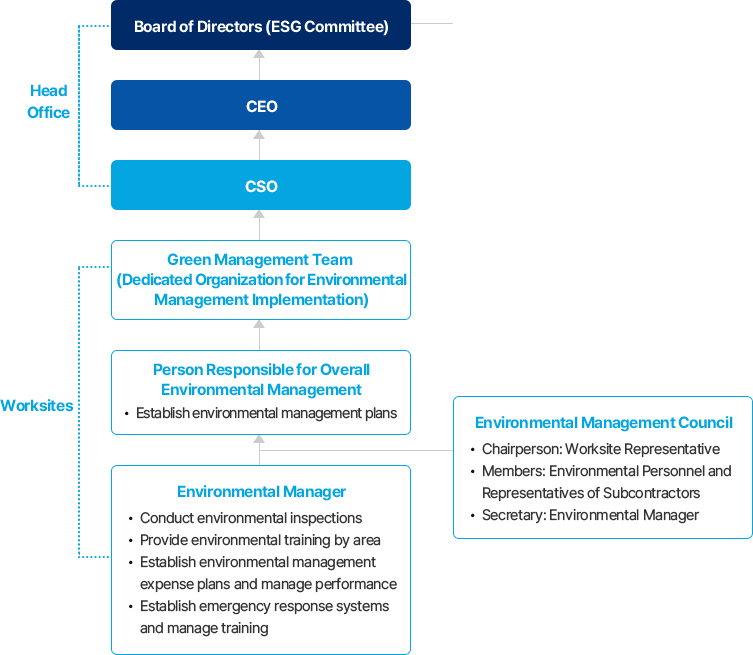
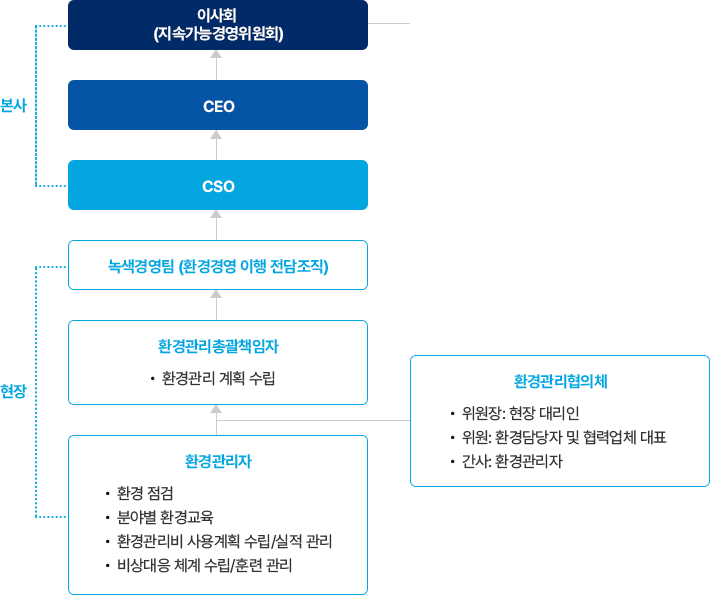
Based on its Quality, Environment and Safety Policy, HL D&I Halla has established a systematic environmental management framework and is enhancing the effective operation and implementation of environmental management across the Company. At the company-wide level, the Chief Strategy Officer (CSO), who has overall responsibility for environmental management, oversees the formulation of strategies and implementation tasks for major environmental issues, including climate change response and carbon neutrality, through the Green Management Team, the responsible department. Material environmental management matters, including climate change, carbon neutrality, and natural capital, are regularly reported to the Board of Directors, the highest decision-making body, through the CSO and CEO. Following deliberation and resolution where necessary, strategic directions and implementation plans are finalized, thereby reinforcing management’s responsible decision-making framework. At the worksite level, environmental management organizations are established at each worksite to consistently conduct environmental management activities throughout the entire process, from commencement of construction to completion. Based on worksite guidelines reflecting the latest environmental regulations, the Company thoroughly reviews regulatory compliance and environmental management performance. The environmental management status of all worksites is reported to the Board of Directors and CEO twice a year, thereby maintaining a monitoring framework at the senior management level. To maximize the effectiveness of environmental management, HL D&I Halla links key environmental performance indicators, including greenhouse gas reductions and waste reductions, to the performance evaluations of C-level executives and employees. This performance-based reward system serves as a key driver encouraging voluntary environmental practices among employees and creating substantive environmental value. Going forward, HL D&I Halla will continue to internalize environmental management awareness and strengthen its environmental risk response capabilities through close collaboration between the head office and worksites.

Environmental Management Organization

(As of May 31, 2026)
Environmental Management Matters Reported to the Board of Directors in 2025

Date Agenda Item Details Approval Status
February 24, 2025 Approval of the 2025 Sustainability Management Implementation Plan 2025 Sustainability Management Implementation Plan
  • Approval of the greenhouse gas reduction action plan
  • Approval of the water use and recycling plan
  • Approval of the review of eco-friendly construction methods to reduce waste generation
Approved
February 24, 2025 Report on Major Environmental Performance in 2024
(Greenhouse Gas, Waste, and Water)
Report on major environmental performance in 2024
Report on performance results and strategic directions
Reported
October 30, 2025 Report on Environmental Performance in 2025 (Greenhouse Gas) Report on the implementation of the 2025 greenhouse gas reduction measures
Report on future action plans
Reported

Environmental Management Policy

HL D&I Halla recognizes responding to the climate crisis as a core corporate priority and has established and operates an Environmental Management Policy to ensure systematic implementation. Approved by the CEO, the policy is transparently communicated to internal and external stakeholders, including all employees and subcontractors. It focuses on the systematic management of environmental performance, the advancement of policies in response to changes in global regulations, and enhanced transparency in information disclosure. Recognizing that quality, environment, and safety constitute an organically interconnected and integrated area of management, HL D&I Halla has separately established its Quality, Environment and Safety Policy with the approval of the Board of Directors, the Company’s highest decision-making body. The policy serves as a rigorous standard governing the operation of all worksites and the performance of employees’ duties and acts as a driving force for improving internal management standards.

Environmental Management System

To ensure the objectivity and reliability of its environmental management, HL D&I Halla has obtained ISO 14001 certification, the international standard for environmental management systems, and systematically and continuously maintains and manages its environmental performance based on this certification. ISO 14001 is a global standard requiring organizations to establish company-wide systems to minimize environmental impacts. It provides the procedures and guidelines necessary for companies to reduce their environmental impacts and realize sustainable management. By faithfully incorporating this standard into its operations, HL D&I Halla proactively prevents environmental risks and ensures the efficient management of resources and energy.
Environmental Management Strategy

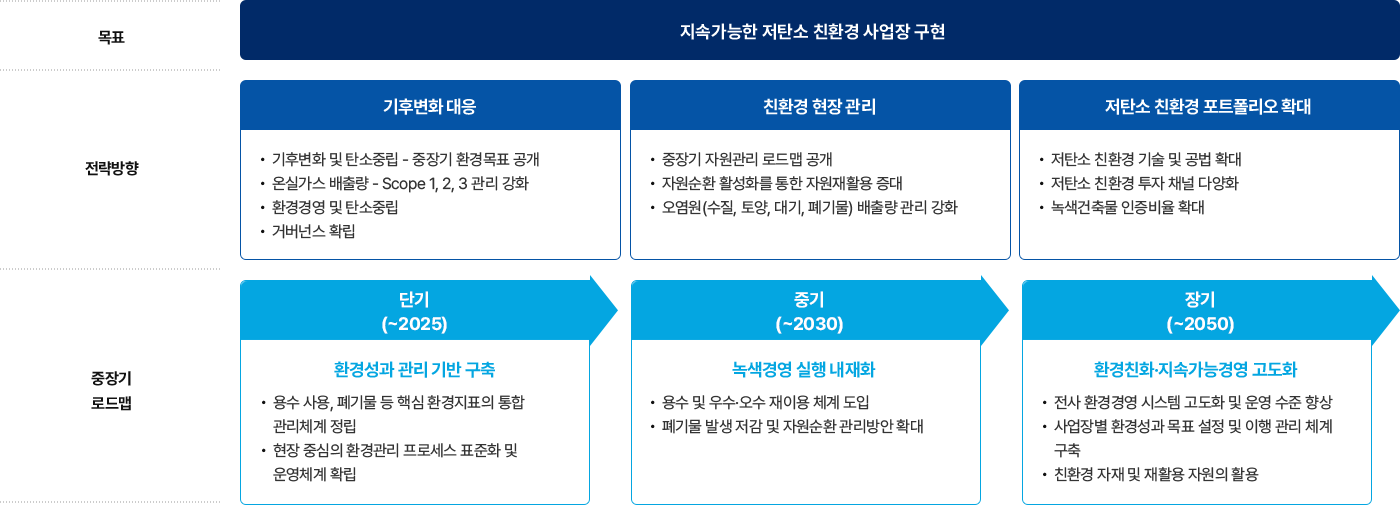
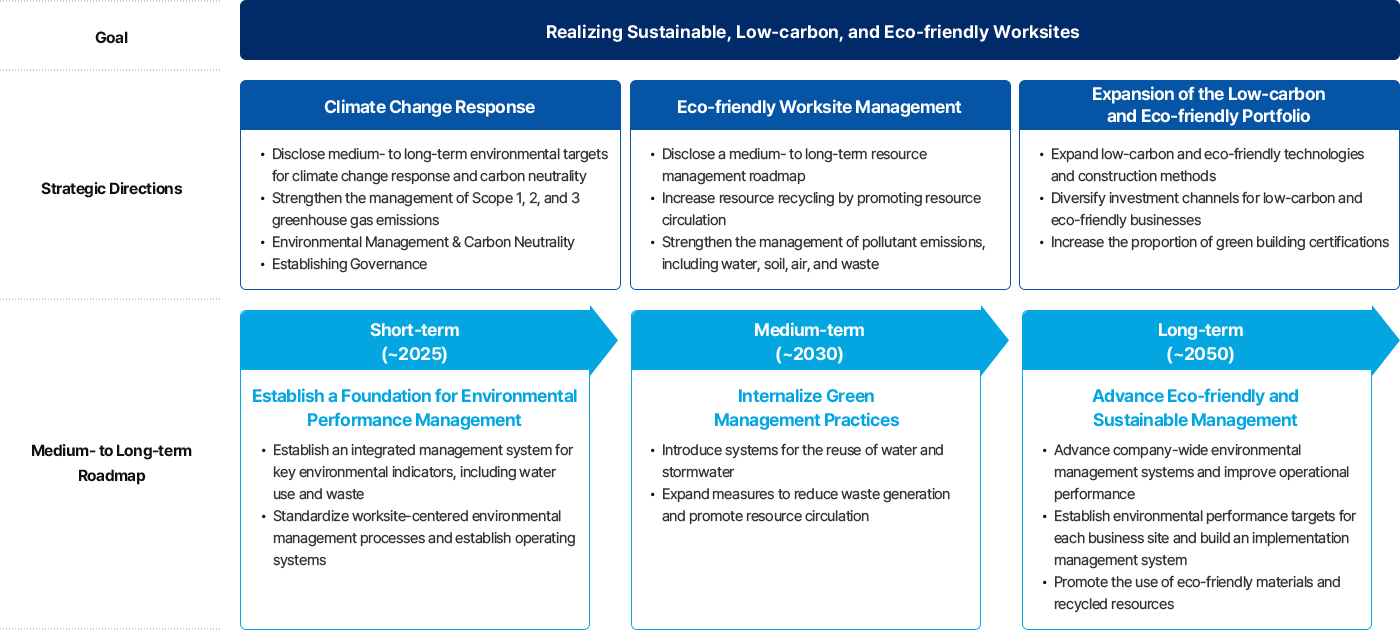
HL D&I Halla has established three strategic directions and a medium- to long-term roadmap to respond proactively to changes in global environmental management and minimize environmental impacts. Based on this framework, the Company systematically implements environmental management with climate change response, eco-friendly worksite management, and expansion of its low-carbon and eco-friendly portfolio as its core strategies. HL D&I Halla has also specified a medium- to long-term roadmap for implementing each strategy and will continue to strengthen its environmental management framework so that all members can proactively participate in environmental management and create substantive environmental performance.

Environmental Management Targets

Environmental Management Medium- to Long-term Roadmap

Category Unit Performance Target Response Strategies
2025 Performance Short-term Target
(~Through 2025)
Medium-term Target
(~Through 2030)
Long-term Target
(~Through 2050)
Short-term Medium-term Long-term Target
Water Consumption Intensity1) ton/KRW 100 million 10 13 12 11
  • Establish a monitoring system for water consumption by major work process
  • Strengthen the management of non-point pollution sources and the operation of reduction facilities
  • Expand the application of water reuse systems
  • Introduce water footprint analysis
  • Operate water circulation systems at all worksites
Violations of Environmental Regulations2) Cases 0 0 0 0
  • Strengthen the goal of zero violations and related training
  • Conduct self-diagnoses of environmental risks at each worksite
  • Automate environmental inspection processes
  • Operate an integrated company-wide Environmental Management System (EMS)
    Introduce an autonomous regulatory management model
Waste Recycling Rate3) % 100 100 100 100
  • Manage waste separation and discharge performance
  • Expand the reuse and recycling of materials
  • Establish zero-waste construction sites
Number of Green Technologies Certified4) Cases 2 At least 1 At least 1 At least 2
  • Monitor government-certified green technologies
  • Secure and promote at least one green-certified technology
  • Establish a smart construction platform based on green technologies

1) Water consumption per unit of revenue

2) Number of fines imposed for violations of environmental regulations

3) Waste recycling rate

4) Number of green technology certifications obtained

Environmental Risk Management

Worksite Management

Sustainability Management Inspections

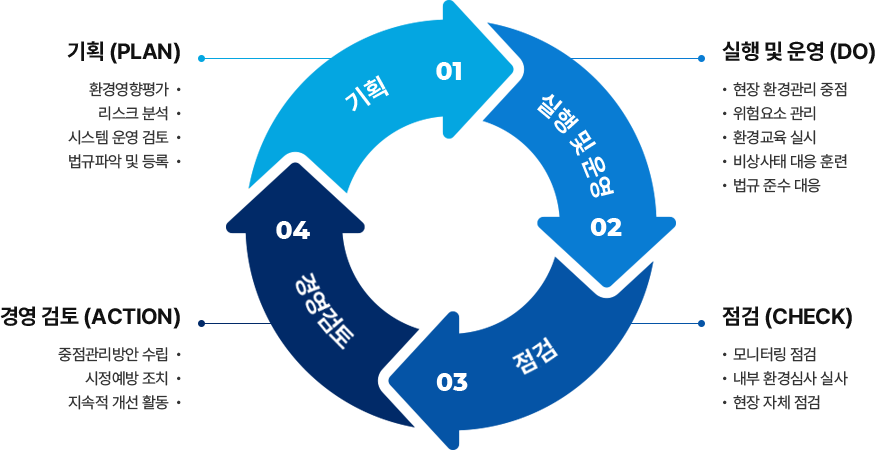
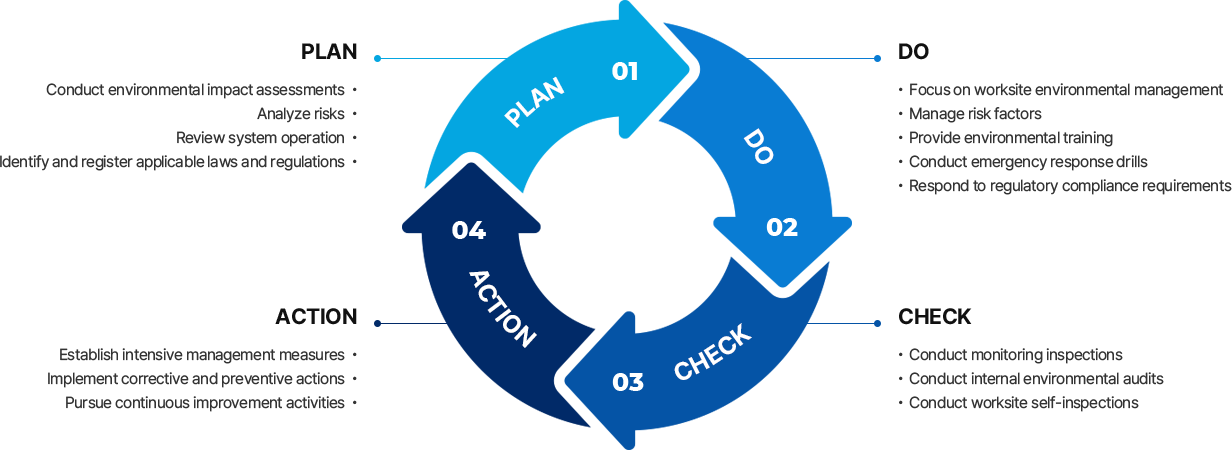
To strengthen its sustainability management capabilities, HL D&I Halla conducts sustainability management assessments at all worksites twice a year, in the first and second halves of each year. The assessments focus on compliance with manuals, procedures, and guidelines established based on Quality and Environment Management System. They also review compliance with applicable environmental laws and regulations, including the Construction Technology Promotion Act. Any matters requiring corrective action identified through the inspections are addressed immediately, thereby continuously improving regulatory compliance. Worksites demonstrating outstanding performance receive a Sustainability Management Award, while their managers are provided with monetary incentives. This motivates worksites to voluntarily implement sustainability management practices. This assessment and incentive system substantially contributes to improving autonomous environmental management at worksites and strengthening company-wide sustainability management capabilities.

Sustainability Management Inspection PDCA Process

Sustainability Management Inspection PDCA Process

Environment
Greenhouse gas management
Pollutant management
Biodiversity conservation
Social
Human rights protection
Education and training
Social contribution
Communication
Job-related Training
Risk management
Regulatory compliance
Information security
Systems
Environmental impact assessments
Supporting management
Construction management
Inspection, testing, and monitoring
Management systems
Regulatory Compliance
Water Environment Conservation Act/Clean Air Conservation Act/Soil Environment Conservation Act
Wastes Control Act/Noise and Vibration Control Act/Chemicals Control Act
Groundwater Act/Sewerage Act
Construction Waste Recycling Promotion Act
Environmental Accident Response System

HL D&I Halla operates a systematic environmental accident response system to ensure a prompt and consistent response to environmental pollution and various environmental incidents. The Company analyzes potential risk factors at each worksite in advance and develops site-specific response scenarios. These scenarios are shared company-wide to establish the foundation for immediate action when an accident occurs. HL D&I Halla also conducts regular semiannual environmental emergency response drills at all worksites. Areas for improvement identified during the drills are immediately incorporated into the relevant response manuals, thereby continuously enhancing the effectiveness of the system. Through preventive monitoring and action-oriented training, the Company aims to ensure strict environmental compliance and minimize damage arising from potential environmental risks.

Environmental Accident Response Process

Environmental Risks and Opportunities by Issue

HL D&I Halla closely analyzes and responds to environmental risks and opportunities that may arise throughout the entire lifecycle of construction projects. The Company operates an integrated environmental risk management system centered on key environmental issues, including air quality, noise and vibration, water resources, chemical substances, greenhouse gases, soil, and waste. HL D&I Halla recognizes that risks related to environmental pollutants and waste may result in significant financial impacts. Accordingly, the Company focuses its technical and financial investments on proactively managing such risks. Based on strict regulatory compliance, HL D&I Halla will strengthen its strategic approach to minimizing environmental impacts, manage environmental risks beyond mere compliance, and contribute to establishing sustainable construction sites.

Environmental Pollutant Management Opportunity Risk and Opportunity Factor Potential Financial Impact Time Horizon1) Potential Financial Impact2) Response Strategy Expected Financial Impact
Environmental Pollutant Management Opportunity Growing social demand to reduce air pollution, including through voluntary fine-dust reduction agreements Enhanced eco-friendly brand value through relevant agreements, strengthening competitiveness in public bidding and urban development projects Long-term Low
  • Advance the worksite management system for reducing fine dust and air pollutants
Low (ApproximatelyKRW 500millionannually)
Risk Stricter regulations on air pollutant emissions, including ultrafine dust, following amendments to the Clean Air Conservation Act Increased equipment investment and operating costs associated with replacing aging construction machinery and installing low-emission devices Medium-term Medium
  • Promote restrictions on engine idling
  • Establish a real-time air pollutant emission monitoring system
Medium (Approximately KRW 600 million annually)
Risk Stricter pollutant regulations under the Environmental Impact Assessment Act, Chemicals Control Act, and Water Environment Conservation Act Legal sanctions and complaint-handling costs arising from failures in pollutant management Long-term Low
  • Establish standards for hazardous substance management
    Operate a company-wide monitoring system
  • Advance pre-inspection and response processes to prevent environmental pollution incidents
Medium (Approximately KRW 300 million annually)
Water Resource Management Risk Stricter regulations governing sewage and wastewater generated at construction sites following amendments to the Water Environment Conservation Act Fines and reputational risks arising from regulatory violations
Increased investment and operating costs for on-site water treatment facilities required to meet water quality standard
Medium-term Low
  • Strengthen the operation and management of water treatment facilities to ensure compliance with water quality standards
Low (Approximately KRW 100 million annually)
Biodiversity and Ecosystems Opportunity Increasing demand for real estate incorporating green spaces, such as urban forests and landscaped areas, which provide improved air quality, noise reduction, and aesthetic value Increased sales through improved presale and occupancy rates Long-term Medium
  • Establish worksite plans incorporating ecological considerations
    Expand the development of green spaces
Low
Risk Stricter natural-capital regulations under the Environmental Impact Assessment Act and the Natural Environment Conservation Act Delays in project schedules and land acquisition for development projects Long-term Medium
  • Operate a preliminary review system to ensure compliance with environmental impact assessment requirements
Low
Resource Circulation and Circular Economy Opportunity Expansion of the use of recycled materials through initiatives such as integrated quality certification for recycled aggregates Securing cost competitiveness by reducing the cost of purchasing external raw materials through the expanded use of recycled materials Long-term Low
  • Expand the use of recycled and eco-friendly materials
Low (Annual cost savings of approximately KRW 100 million)
Risk Strengthened management standards, including those under the Construction Waste Recycling Promotion Act Increased waste treatment costs
Sanctions and fines for failure to comply with mandatory recycling rates
Medium-term Medium
  • Strengthen waste segregation and treatment standards
    Improve recycling rates
High (Approximately KRW 3 billion annually)

1) Time horizon: Long-term refers to impacts expected after ten years, medium-term to impacts expected within six to ten years, and short-term to impacts expected within two to five years.

2) Magnitude of impact: High indicates a significant impact on the Company’s financial position that may require adjustments to business operations or strategies; medium indicates a moderate impact requiring close monitoring; and low indicates a limited financial impact that does not require adjustments to corporate strategy.

Compliance with Environmental Laws and Regulations

HL D&I Halla has established an environmental regulation management system by area to ensure rigorous compliance with environmental laws and regulations. The Company registers applicable laws and regulations in its internal system and manages them systematically using data. Each worksite conducts regular semiannual inspections and monthly environmental performance and compliance assessments using regulatory compliance checklists. Any identified nonconformities are immediately corrected, and follow-up measures are implemented. In particular, corrective actions identified at individual worksites are shared company-wide to prevent the recurrence of similar cases and standardize regulatory compliance capabilities across worksites. HL D&I Halla also continuously monitors the enactment and amendment of relevant laws and regulations. Changes are promptly communicated through the Company’s internal platform, Hanmaru, thereby maintaining a proactive and stable compliance risk management system.

Regulatory Compliance Process

Step 1
  • Monitor the Enactment and Amendment of Laws and Regulations
Step 2
  • Register Applicable Laws and Regulations
Step 3
  • Establish a Monitoring Plan
  • Evaluate compliance
Step 4
  • Implement Corrective Action
  • Identify risks
  • Improve risk factors
Step 5
  • Analyze Evaluation Results
  • Implement preventive measures

Environmental Regulatory Response Strategies

Category Key Regulation Regulatory Requirement Response Strategy
Air Clean Air Conservation Act Compliance with standards by emission process
  • IoT-Based Fugitive Dust Monitoring
  • Distribution of Process-Specific Response Guidelines for Emergency Fine Dust Reduction Measures
  • IoT-Based Noise and Vibration Monitoring
Water Resources Water Environment Conservation Act Appropriateness of non-point pollution source management standards
  • Prepare management and operation logs for non-point pollution reduction facilities
Appropriateness of hazardous chemical management standards
  • Install MSDS materials and bulletin boards
Greenhouse Gases Framework Act on Carbon Neutrality and Green Growth for Coping with Climate Crisis Implementation of greenhouse gas reduction measures
  • Expand phased application and develop related technologies
Soil Soil Environment Conservation Act Implementation of measures to prevent secondary contamination
  • Invest in soil remediation technologies
Waste Wastes Control Act Appropriateness of waste segregation, storage, and treatment
  • Invest in waste treatment technologies/Expand recycling and reuse

Internalization of Environmental Management

Environmental Management Education

HL D&I Halla provides systematic environmental education to enhance employees’ awareness of environmental management and strengthen worksite management capabilities. Participants include head office personnel, worksite environmental managers, subcontractor representatives and supervisors, and workers, covering all personnel directly and indirectly involved in the Company’s environmental management activities. Training is conducted regularly on a semiannual basis and focuses on environmental laws and regulations, waste storage and treatment procedures, and management measures for worksites and surrounding areas. In particular, newly established worksites receive customized environmental management training through on-site visits that reflect the specific characteristics of each worksite, thereby strengthening practical management capabilities. HL D&I Halla also promotes group training for worksite personnel to further enhance environmental awareness and encourage substantive efforts toward sustainable management practices.

Environmental Education Programs

Category Training Content
Employees
  • Environmental laws and regulations
  • Waste storage and treatment
  • Emergency reduction measures for high-concentration fine dust
  • Dissemination of worksite environmental management practices and accident cases
  • Training on greenhouse gas and energy reduction measures
  • Training on environmental regulation violation cases and major regulatory amendments
  • Biodiversity education
Subcontractors
  • Environmental management matters reflecting worksite characteristics
  • Management of worksites and surrounding areas during worksite establishment
  • Groundwater management guidelines for construction sites
  • Training on emergency fine-dust reduction measures
  • Environmental education for major work processes

Environmental Education1)

Category Unit 2023 2024 2025
Participants Completing Environmental Education Persons 1,922 3,002 4,993
Environmental Education Hours Hours 56.25 178 288

1) Includes employees and subcontractor personnel

Environmental Management Campaigns

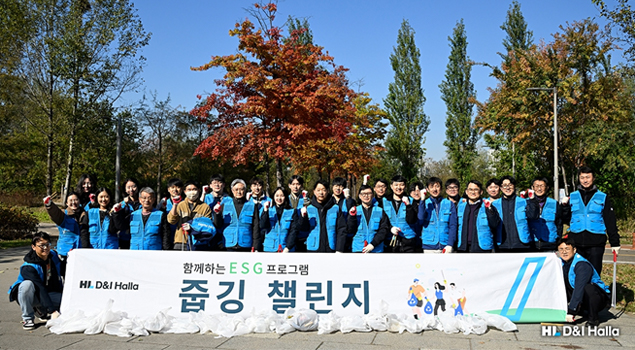
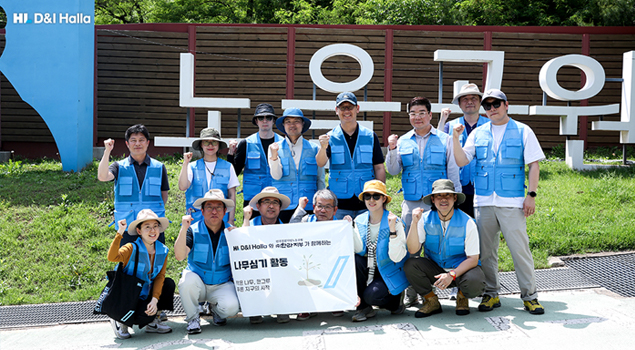
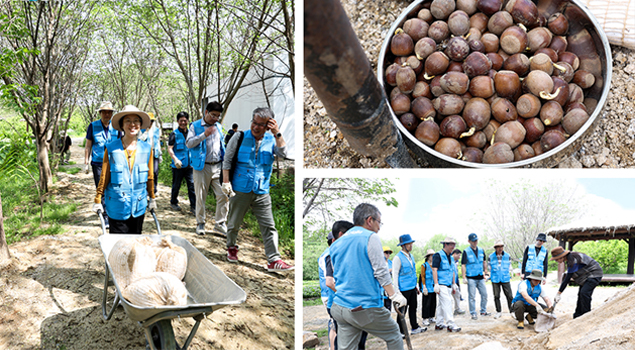
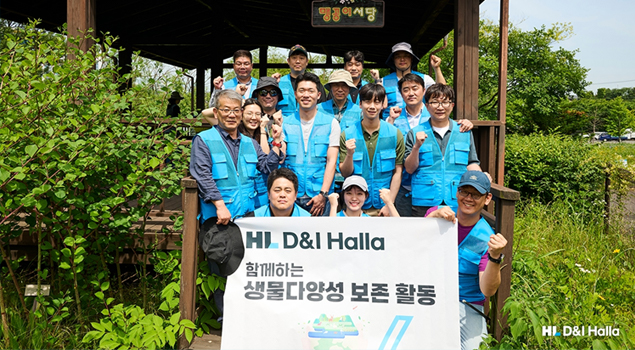
Environmental Management Campaign Activities HL D&I Halla conducts environmental management campaigns each year to establish a company-wide sustainability culture through employees’ voluntary participation and create environmental value together with local communities. In 2025, various programs were organized to encourage employees to incorporate environmental protection into their daily lives, going beyond the Company’s carbon-neutrality practices, and to increase awareness of the importance of ecosystem conservation. Through the Plogging Challenge, the Company raised employees’ awareness of reducing carbon emissions in their daily lives. The tree-planting activity helped secure company-wide carbon absorption capacity and express the Company’s commitment to actively responding to climate change. In addition, ecological education for local children and biodiversity conservation activities enhanced environmental sensitivity among future generations and created substantive environmental value by protecting habitats. HL D&I Halla will continue to develop participatory programs that employees can enjoy and engage in and further strengthen an eco-friendly management culture that coexists with local communities.

Environmental Management Campaign Activities in 2025

Activity Participants Purpose Details
Plogging Challenge Head office and worksite employees
  • Establish a company-wide sustainability culture through employees’ voluntary participation
  • Protect the environment and promote health while creating value for local communities
  • Plogging activities around Jamsil worksites
    (Collection of 0.2 tons of waste)
Tree Planting Employees
  • Contribute to environmental protection by planting trees to absorb carbon at the company level
  • Promote the Company’s commitment to eco-friendly management through proactive climate action
  • Planted 40 oak tree trees at Noeul Park
    (Estimated offset effect of approximately 9.2 tCO₂eq)
Ecological Education Children supported by the Siheung 1% Welfare Foundation
  • Raise awareness of the importance of ecosystem conservation Enhance environmental sensitivity among future generations
  • Environmental and ecological education
Biodiversity Conservation Employees
  • Raise awareness of the importance of biodiversity conservation through ecosystem conservation and habitat protection activities
  • Created a 1,257 m² alternative habitat for otters
    (Conserved 850 m² of existing habitat)
Ecological Education Local elementary school students
  • Educate students in the surrounding communities about the importance of environmental protection and biodiversity conservation Provide opportunities to put environmental practices into action
  • Ecological education and hands-on field activities

Environmental Management Campaign Activities in 2025

Plogging Challenge

Tree Planting

Biodiversity Conservation

Eco-friendly Supply Chain

Training Case

2024 Environmental Education for HL D&I Halla Subcontractors

HL D&I Halla regularly provides systematic environmental education to fulfill its environmental responsibilities jointly with its subcontractors. In 2024, the Company provided environmental management training to subcontractors, with a total of 305 participants completing the program. The training delivered practical information focusing on environmental laws and regulations, waste treatment standards, and the management of worksites and surrounding areas.

Category Unit 2025
Participants in Environmental Education for Subcontractors Persons 55

Green Purchasing Policy

As part of its sustainable environmental management practices, HL D&I Halla has systematically established policies and implementation systems to expand the purchase of eco-friendly products. The Company has established a green product purchasing process and developed purchasing policies and guidelines supporting the process, which are applied company-wide. The scope is not limited to existing construction materials and subsidiary materials. It is being gradually expanded to various items, including office supplies used at the head office and individual worksites. The criteria for eco-friendly products have been clearly established based primarily on credible certification systems. HL D&I Halla gives priority to products certified under the Ministry of Environment’s Low Carbon Certification, GR (Good Recycled) Certification, and Environmental Product Declaration certification when compiling its list of green products and making purchasing decisions. The Company is also reorganizing its existing subcontractor evaluation process to incorporate criteria related to the delivery of eco-friendly products.

Going forward, HL D&I Halla plans to introduce an incentive system that awards additional points to subcontractors supplying eco-friendly products, thereby encouraging an eco-friendly transition throughout the supply chain. HL D&I Halla will continue to strengthen the effectiveness of its green purchasing system and advance purchasing strategies aimed at reducing environmental impacts.

Green Purchasing and Sales Performance

Category Unit 2023 2024 2025
Number of Green Products Purchased Items 11 11 13
Purchase of Green Products and Services1) KRW 10 million 12,265 12,454 12,140
Eco-friendly Sales2) 47,830 78,426 66,311

1) Total material purchases: KRW 230.21 billion in 2023, KRW 421.03 billion in 2024, and KRW 232.34 billion in 2025

2) Eco-friendly sales are calculated based on green buildings and the cost of eco-friendly materials