Climate Impact Analysis Process
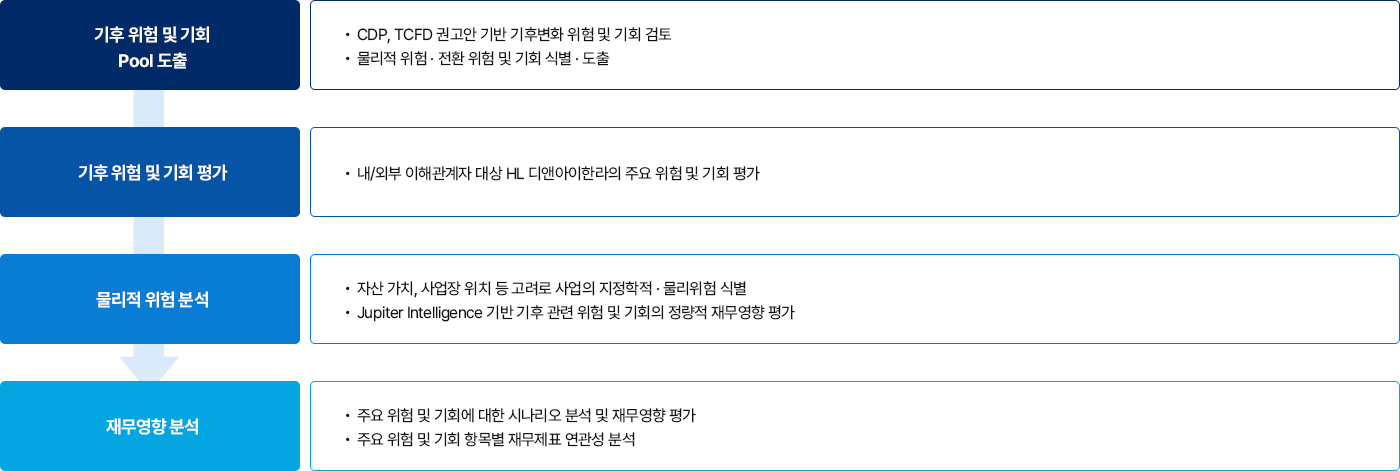
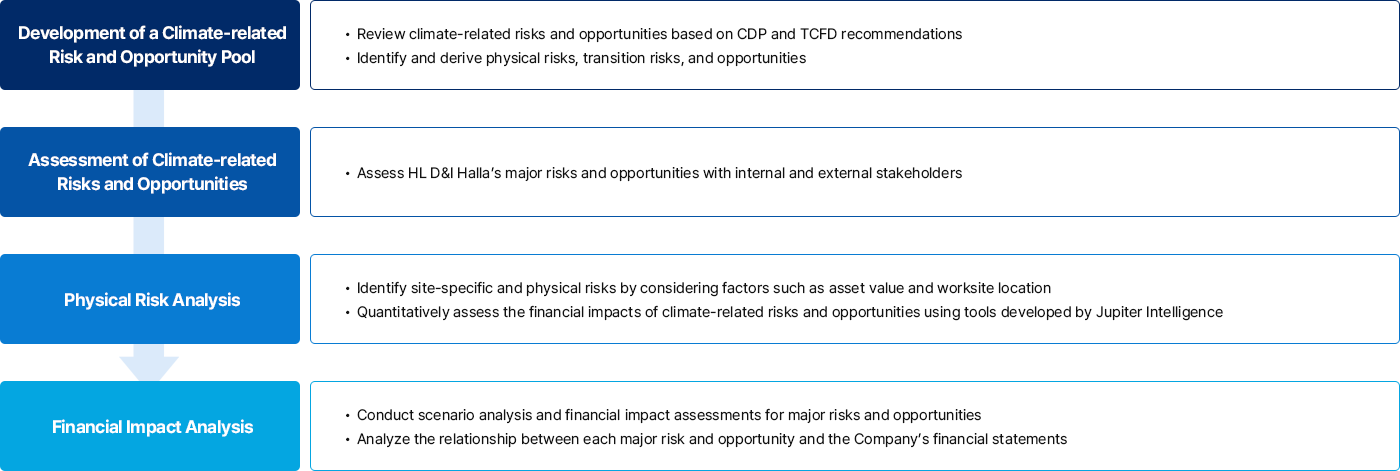
To minimize climate-related risks and maximize opportunities, HL D&I Halla has established a four-step process for identifying climate-related risks and opportunities and analyzing their financial impacts.
Through this process, the Company identifies climate-related risks and opportunities and systematically manages major issues that may affect its business by deriving qualitative and quantitative financial impacts for each item.
Climate-related Risk and Opportunity Pool
HL D&I Halla identifies climate-related risk and opportunity factors based on the TCFD recommendations, the characteristics of the construction industry, and cases involving industry peers.
Through this process, the Company identified eight physical risks, seven transition risks, and nine opportunity factors that may affect business operations, financial performance, and medium- to long-term management strategies.
The Company also conducts climate scenario analyses to assess how risks and opportunities arising from climate change may affect its business strategies and evaluates the physical risk exposure of worksites and projects.
In addition, HL D&I Halla reviews the likelihood and scale of impact of the identified risks and opportunities, selects key issues, and establishes corresponding response directions.
Climate-related Risk Materiality Assessment
Physical Risk Materiality Assessment Results
HL D&I Halla identified typhoons, floods, wildfires, heatwaves, and droughts as major physical risks through its climate materiality assessment. The assessment found that typhoons and torrential rain represented major risk factors with both a high likelihood of occurrence and high financial impact. Heatwaves and droughts were also identified as major risks that could affect worksite operating efficiency and increase energy consumption.
| NO |
Item |
Likelihood |
Impact |
| P6 |
Torrential Rain |
H |
H |
| P3 |
Typhoon |
H |
H |
| P2 |
Heatwave |
H |
M |
| P4 |
Drought |
M |
H |
| P1 |
Cold Wave |
M |
M |
| P5 |
Flood |
M |
M |
| P7 |
Hail/Thunderstorms |
L |
M |
| P8 |
Wildfire |
L |
M |
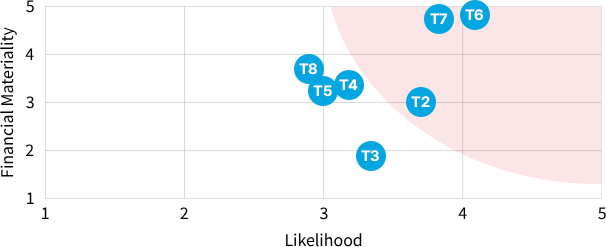
Transition Risk Materiality Assessment Results
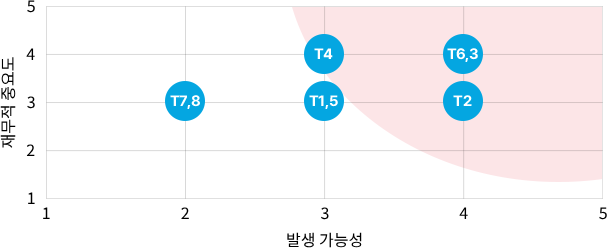
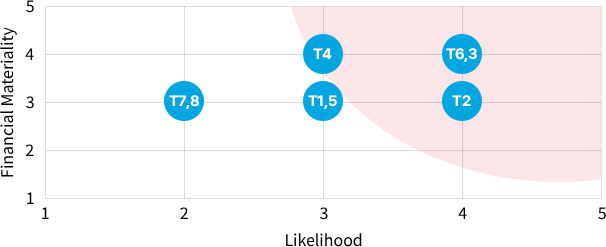
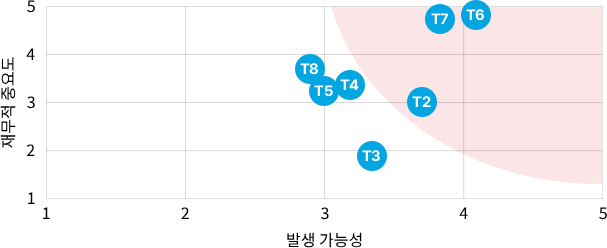
Through its climate materiality assessment, HL D&I Halla identified rising raw material and resource prices, increasing electricity prices, and stricter building energy regulations as major transition risks.
| NO |
Item |
Likelihood |
Materiality |
| T6 |
Rising Prices of Raw Materials and Resources |
H |
H |
| T7 |
Rising Electricity Prices |
H |
H |
| T2 |
Stricter Low-carbon and Environmental Regulations, Including Building Energy Regulations |
H |
M |
| T8 |
Negative Stakeholder Opinions and Reputational Risk |
L |
M |
| T4 |
Increased Costs Associated with the Electrification of Construction Equipment |
M |
M |
| T5 |
Growing Consumer and Customer Demand for Eco-friendly Construction Services |
M |
M |
| T3 |
Increased Legal Risks Related to Compliance and Litigation |
M |
L |
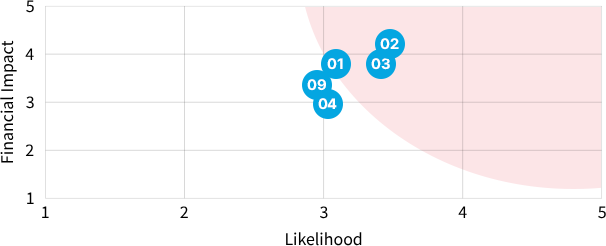
Opportunity Materiality Assessment Results
HL D&I Halla conducted an opportunity materiality assessment to identify business opportunities that may arise in the course of responding to climate change. The assessment identified the transition to electrified and high-efficiency equipment, expanded material reuse, and the conversion of internal combustion engine vehicles to electric vehicles as major opportunity factors.
These opportunities are expected to contribute not only to reduced energy consumption and improved operational efficiency, but also to lower carbon emissions and enhanced competitiveness amid growing demand for eco-friendly construction.
| NO |
Item |
Likelihood |
Materiality |
| O2 |
Transition to Electrified and High-efficiency Equipment |
H |
H |
| O3 |
Reuse of Materials and Containers |
M |
H |
| O1 |
Conversion of Internal Combustion Engine Vehicles to Electric Vehicles |
M |
M |
| O9 |
Growing Consumer Demand for Eco-friendly Buildings |
M |
M |
| O4 |
Expanded Use of and Investment in Low-carbon and Renewable Energy |
M |
M |
Climate-related Risk Analysis Period
HL D&I Halla categorizes and manages the impact periods of climate-related risks and opportunities as short-term, within one year; medium-term, one to five years; and long-term, more than five years.
Business strategies are developed by reflecting changes in the market environment of each business division. Climate-related risks and opportunities are linked to major decision-making processes by considering their impacts on business operations and financial performance.
Short-term
Within one year
Medium-term
One to five years
Long-term
More than five years
Analysis of Major Physical Risk Impacts
In accordance with the TCFD recommendations, HL D&I Halla conducted a climate scenario-based physical risk exposure assessment to identify the impacts of physical risks arising from climate change on its businesses and strategies.
The TCFD recommends using appropriate analytical tools aligned with corporate objectives. Accordingly, HL D&I Halla adopted a climate analytics solution developed by Jupiter Intelligence to conduct a detailed and systematic risk assessment.
Based on satellite and ground observation data and climate forecasting models, the solution quantifies the risk levels associated with various climate-related natural disasters, including floods, heatwaves, typhoons, and droughts, and quantitatively estimates their financial impacts.
The model uses the CMIP61) climate scenarios included in the IPCC Sixth Assessment Report to analyze long-term physical risks from 2020 to 2100.
Selection of Physical Risk Scenarios
The SSP scenarios were introduced in the IPCC Sixth Assessment Report in 2021 and reflect projected changes in future socioeconomic systems, including the Earth’s radiative forcing, population, the economy, and energy consumption, through 2100.
HL D&I Halla assessed the impacts of physical risks using Jupiter Intelligence. The scenarios applied in the tool were SSP1–2.6 at 1.8°C, SSP2–4.5 at 2.7°C, and SSP5–8.5 at 4.4°C.
IPCC2) SSP3) Scenarios
| Scenario |
Description |
| SSP 1~2.6(1.8°C) |
Low-emissions scenario |
Assumes that the use of fossil fuels is minimized through advances in renewable energy technologies and that sustainable economic growth is achieved. |
| SSP 2~4.5(2.7°C) |
Intermediate-emissions scenario |
Assumes an intermediate level of climate change mitigation and socioeconomic development. |
| SSP 5~8.5(4.4°C) |
High-emissions scenario |
Assumes rapid industrial and technological development centered on high fossil fuel consumption and the expansion of indiscriminate development. |
1) CMIP6: CMIP6The Sixth Coupled Model Intercomparison Project, a project used in IPCC assessment reports to compare and evaluate global climate models
2) IPCC: Intergovernmental Panel on Climate Change
3) SSP: Shared Socioeconomic Pathways
Analysis of Exposure to Climate-related Disasters
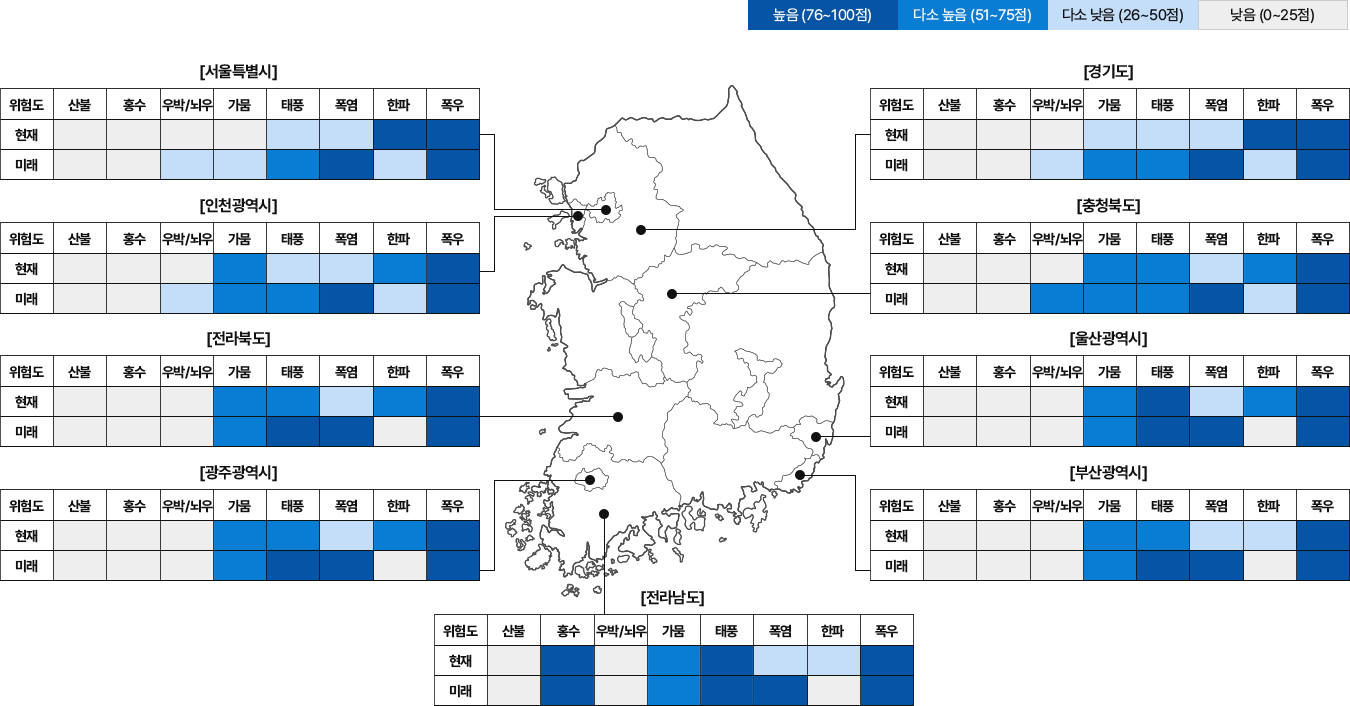
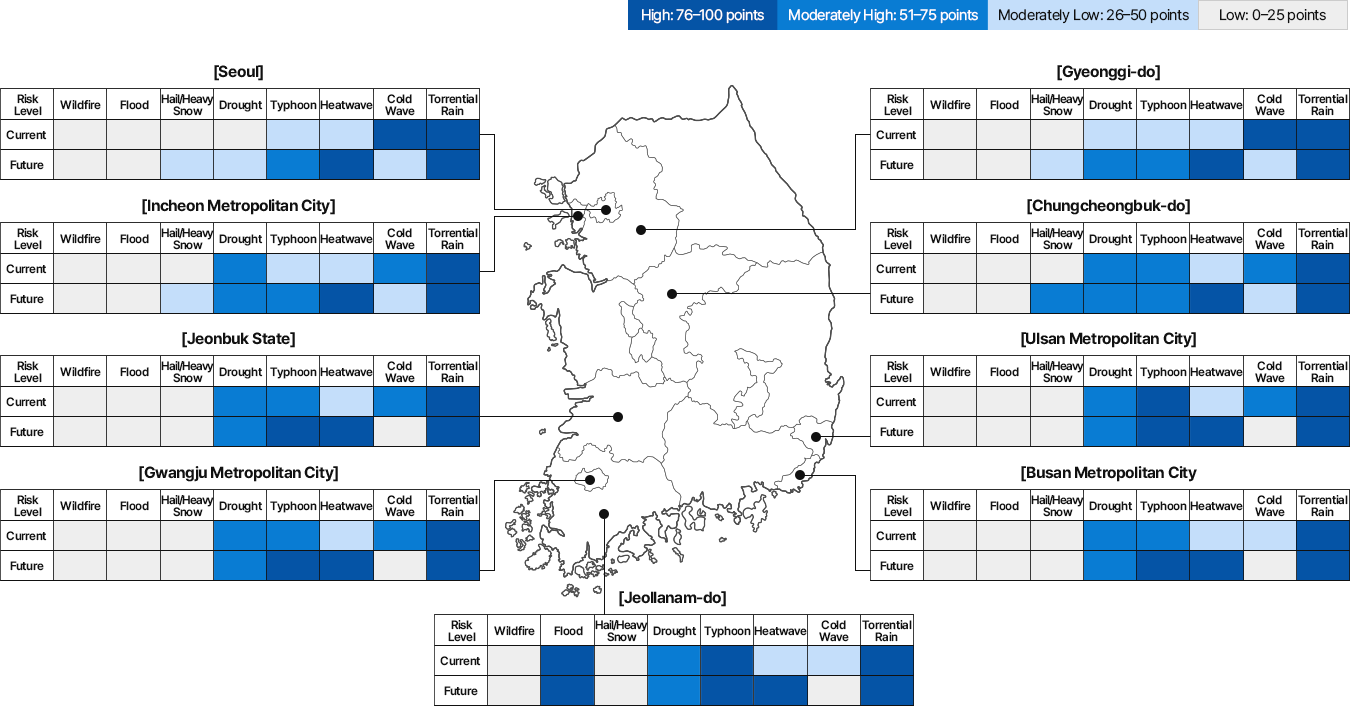
HL D&I Halla conducted a quantitative analysis of eight types of natural disasters that may affect each worksite due to climate change—floods, typhoons, torrential rain, heatwaves, hail and thunderstorms, droughts, wildfires, and cold waves—by applying the SSP5–8.5 scenario, which assumes a temperature increase of 4.4°C.
The analysis quantified each worksite’s current exposure to disaster risks based on 2020 and derived change scores reflecting climate change impacts through 2050. The current exposure score and change score were then considered comprehensively to calculate the projected exposure score for 2050.
The likelihood of disaster occurrence was analyzed based on climate modeling results. Based on these findings, the Company assessed the current and future risk exposure of each worksite and the drivers of occurrence for each major disaster type.
The analysis found that HL D&I Halla’s domestic construction sites and business sites showed the highest current and future exposure to torrential rain, with relatively high exposure identified in all regions.
Future drought exposure was also projected to increase in most regions except Seoul. In particular, construction sites in Jeollanam-do showed high current and future flood exposure because they are located near Mokpo NewPort and have a low elevation above sea level.
Key Disaster Exposure Measurement Indicators
1. Acute Hazards
| Hazard |
Indicator Used (Weight by Indicator) |
| Flood |
- Maximum inundation depth for a 200-year return period (80%)
- Maximum inundation area for a 200-year return period (20%)
|
| Typhoon |
- Maximum wind speed for a 100-year return period (100%)
|
| Torrential Rain |
- Maximum daily precipitation for a 100-year return period (100%)
|
| Hail/Heavy Snow |
- Annual number of days with the potential occurrence of hail measuring 5 cm (2 inches) or more in diameter (100%)
|
| Wildfire |
- Annual number of wildfire events occurring within 1 km² of a specific location (100%)
|
| Cold Wave |
- Annual number of days with temperatures below 0°C (50%)
- Annual average Heating Degree Days¹) (50%)
|
2. Chronic Hazards
| Hazard |
Indicator Used(Weight by Indicator) |
| Heatwave |
- Annual number of days with temperatures exceeding 35°C: 33%
- Annual number of days with Wet Bulb Global Temperature²) exceeding 32°C: 33%
- Annual average Cooling Degree Days³): 33%
|
| Drought |
- Water Stress Index⁴) for the relevant region: 100%
|
1) Heating Degree Days: An indicator of the energy required for heating to maintain a comfortable indoor temperature, calculated as the sum of the differences between 18°C and the average temperature on days when the annual average temperature is below 18°C.
2) Wet Bulb Global Temperature: A heat stress index that comprehensively considers not only temperature, but also humidity and radiant heat affecting the human body.
3) Cooling Degree Days: An indicator of the energy required for cooling to maintain a comfortable indoor temperature, calculated as the sum of the differences between the average temperature and 18°C on days when the annual average temperature is above 18°C.
4) Water Stress: The ratio of water demand to water supply in a given region. Water supply refers to the sum of the water resources available within the region and the remaining supply from upstream water sources after meeting their own demand.
Results of Climate-related Disaster Exposure Analysis by Business Site
Results of Business Site Analysis1)
1) Average risk exposure results by administrative district based on the region in which each business site is located
Financial Impact Assessment of Physical Risks
To assess the substantive financial impacts of climate change on its business, HL D&I Halla selected five of the eight climate hazards expected to have material financial impacts—floods, typhoons, wildfires, droughts, and heatwaves—and conducted a quantitative analysis.
To enhance the accuracy of the assessment, the Company used Jupiter Intelligence, a specialized climate modeling tool, and applied three scenarios ranging from a climate change mitigation scenario to a high-risk scenario: SSP1-2.6, SSP2-4.5, and SSP5-8.5.
Based on these scenarios, HL D&I Halla quantitatively estimated Average Annual Loss (AAL) from the short term, beginning in 2025, to the period beyond the long term, extending to 100 years.
Heatwaves, Typhoons, Floods, and Wildfires
Risks of Asset Damage and Business Interruption
Typhoons, floods, and wildfires may cause direct physical damage to buildings, facilities, and inventory at business sites. They may also result in additional indirect financial losses due to operational disruptions during the restoration of damaged facilities and recovery from power outages.
Based on a comprehensive analysis of asset values and climate data for return periods ranging from 10 to 500 years, including inundation depth and wind speed, Average Annual Loss under SSP5-8.5—the scenario with the highest greenhouse gas emissions—is projected to increase gradually from KRW 1.8 billion in the short term, 25 years, to KRW 2.2 billion beyond the long term, 100 years.
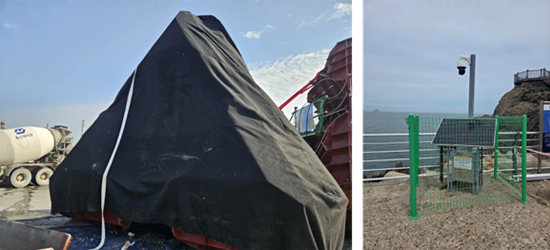
In response, HL D&I Halla is advancing its abnormal-weather monitoring system and developing schedule-delay improvement measures and response plans to prevent construction delays and asset damage caused by rapidly changing weather conditions, including typhoons, floods, and wildfires.
(Unit: KRW 100 million)
| Category |
Short-term (25 years) |
Medium-term (30 years) |
Long-term (50 years) |
Beyond Long-term (100 years) |
SSP1-2.6
(1.8°C) |
17 |
18 |
18 |
19 |
SSP2-4.5
(2.7°C) |
18 |
18 |
18 |
19 |
SSP5-8.5
(4.4°C) |
18 |
18 |
19 |
22 |
Overview of Financial Impact Analysis for Transition Risks and Opportunities
To systematically analyze transition risks and opportunity factors that may arise from climate change, HL D&I Halla considered a broad range of climate scenarios, from gradual mitigation scenarios to high-risk scenarios involving an intensifying climate crisis.
The scenario analysis adopted the latest SSP scenarios presented by the Intergovernmental Panel on Climate Change (IPCC) in its Sixth Assessment Report, along with scenarios developed by the International Energy Agency (IEA) and the Network for Greening the Financial System (NGFS).
Selection of Transition Risk and Opportunity Scenarios
HL D&I Halla used IEA and NGFS scenarios to assess the impacts of climate-related transition risks and opportunity factors.
For the analysis of carbon-cost-related risks and opportunities, the Company applied the STEPS, APS, and NZE scenarios presented in the IEA’s World Energy Outlook.
For the analysis of impacts arising from rising electricity prices and expanded renewable energy use, the Company applied the NGFS Below 2°C, Delayed Transition, and Net Zero 2050 scenarios.
Through this analysis, HL D&I Halla examined how changes in major transition variables, including carbon prices and electricity rates, may affect its business.
IEA1) Scenarios
| Scenarios |
Description |
| STEPS2) (2.4°C) |
Assumes that current policy settings remain in place, taking into account policy measures, reduction targets, and plans currently being implemented by major countries. |
| APS3) (1.7°C) |
Assumes that governments fully implement their nationally determined contributions and carbon neutrality commitments within the pledged timeframes. |
| NZE4) (1.4°C) |
Assumes that the global energy sector achieves net zero emissions by 2050 to limit the temperature increase to 1.5°C or lower by 2100. |
1) IEA : International Energy Agency
2) STEPS: Stated Policies Scenario, a scenario that considers policies, confirmed reduction plans, and related measures currently being implemented or established by major countries
3) APS : Announced Pledges Scenario, a scenario assuming the timely implementation of the carbon neutrality targets announced by major countries
4) NZE: Net Zero Emissions by 2050 Scenarios
NGFS5) Scenarios
| Scenarios |
Description |
| Below 2°C |
Reduces emissions by 80% from current levels by 2050 and limits the increase in the global average temperature to below 2°C |
| Delayed Transition |
Implements stringent emissions reduction policies after 2030 |
| Net Zero 2050 |
Achieves net zero emissions by 2050 and limits the increase in the global average temperature to below 1.5°C |
5) NGFS: Network for Greening the Financial System, an international organization that analyzes the effects of climate change and environmental risks on the financial system
Analysis of Major Transition Risk Impacts
HL D&I Halla conducted a materiality assessment of likelihood and financial impact with internal stakeholders and external experts to identify climate-related transition risks that may affect its business. The assessment identified stronger regulations on products and services, rising prices of raw materials and resources, and rising electricity prices as major transition risks.
For certain items, the Company used IEA and NGFS scenarios to quantitatively estimate the financial impacts and closely analyze how climate-related transition risks may affect its business. The financial impacts of these transition risks and opportunities were calculated on a nominal basis without applying a present value discount rate.
Strengthening of Low-carbon and Environmental Regulations, including Zero Energy Building (ZEB) Regulations
As regulations related to eco-friendly and low-carbon buildings continue to strengthen, the expansion of mandatory Zero Energy Building certification and certification reviews for completed buildings under the Framework Act on Carbon Neutrality and Green Growth for Coping with Climate Crisis are expected to increase regulatory compliance costs.
HL D&I Halla estimated future regulatory compliance costs based on the average annual gross floor area of completed buildings and the actual green building certification review cost per unit area incurred in 2025. The Company also analyzed the financial impact by including additional construction costs per unit area required to comply with the relevant regulations.
The analysis found that additional costs arising from stricter building energy regulations were estimated at approximately KRW 28.92 billion in the medium term and KRW 34.53 billion in the long term, with the cumulative financial impact through 2050 projected at approximately KRW 820.8 billion.
To respond to strengthened low-carbon environmental regulations in the building sector, HL D&I Halla is expanding the use of high-efficiency equipment and eco-friendly materials and enhancing its design and construction capabilities to meet Zero Energy Building and green building certification standards.
The Company also operates an eco-friendly design process that enables energy consumption and carbon emissions to be reviewed in advance from the design stage and actively applies high-insulation and airtight materials and energy-saving construction methods.
In addition, HL D&I Halla systematically manages its eco-friendly construction material supply chain and strengthens its environmental monitoring system at each worksite to minimize regulatory compliance costs and operational risks.
(Unit: KRW 100 million)
| Category |
Short-term (2025) |
Medium-term (2030) |
Long-term (2050) |
| Green Building-related Costs |
- |
289.2 |
345.3 |
Outstanding Practice
Proactive Response to Mandatory ZEB Grade 5 Requirements
HL D&I Halla is strengthening its market competitiveness by treating increasingly stringent climate regulations, including the mandatory Grade 5 Zero Energy Building requirements effective from June 30, 2025, as a driver of business innovation.
The Company selected the B2BL public housing project in the Gunsan Sinyeokse District as its standard model and developed an energy self-sufficiency optimization strategy. This resulted in an optimal economic scenario capable of responding flexibly to energy efficiency standards 1.2 times more stringent than the previous level and to renewable energy installation requirements more than twice as high.
Derived through the analysis of approximately 30 simulation cases, the strategy focuses particularly on overcoming the physical limitation of insufficient rooftop space in high-density urban apartment housing.
To address this issue, HL D&I Halla independently developed a solar power capacity calculation tool specialized for apartment housing. The Company also advanced the complex regulatory response process into a standardized service process through integrated design logic that automatically reflects insufficient energy generation capacity in the building envelope area (BAPV).
HL D&I Halla is incorporating these research outcomes into its company-wide design guidelines to minimize business uncertainty in the carbon neutrality era. Through precise preliminary estimates, the Company will predict construction cost fluctuation risks arising from stricter ZEB standards and demonstrate stable project execution capabilities. It also plans to provide residents with high-performance housing services that reduce maintenance cost burdens through optimized energy design.
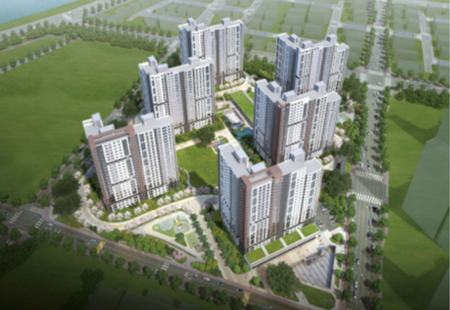
Selection of a Standard Building (B2BL, Gunsan Sinyeokse District)
Rising Prices of Raw Materials and Resources
As competition for global resources and suppliers’ carbon cost burdens increase due to climate change and strengthened climate policies, instability in raw material supply and risks of rising construction material prices are expected to intensify.
HL D&I Halla is not an entity directly subject to emissions trading scheme allocations. However, the Company estimated the financial impact by considering the possibility that carbon emissions costs incurred by subcontractors may be reflected in product prices and passed through to procurement costs as carbon regulations tighten and free allocation ratios gradually decline.
The analysis was conducted on steel products purchased in 2025. The results showed that additional procurement costs attributable to rising steel raw material prices were estimated at a minimum of KRW 0.1 million in the short term, based on IEA scenarios, and were projected to increase to more than KRW 1 million in the medium term.
In the long term, by 2050, additional procurement costs are projected at KRW 287 million under the STEPS scenario, KRW 645 million under the APS scenario, and KRW 806 million under the NZE scenario.
In the short and medium term, the financial impact on the supply chain is expected to remain limited due to relatively low free allocation ratios and carbon prices. In the long term, however, stronger carbon neutrality policies are expected to drive a significant increase in carbon prices and expand the burden of purchasing emission allowances for steel manufacturers, thereby increasing the impact of raw material price rises.
To address raw and subsidiary material price volatility risks that may arise during the low-carbon transition, HL D&I Halla is expanding the application of eco-friendly materials and strengthening its supply chain management system.
The Company also systematically manages the value chain of carbon-intensive core raw materials, including steel, and continuously monitors supply chain risks.
Analysis of Major Opportunity Impacts
HL D&I Halla conducted a quantitative analysis of potential financial impacts using industry outlooks and internal data for selected items expected to affect its business through proactive responses to climate-related risks and the transition to a low-carbon society.
The Company analyzed the effects of each opportunity factor on its business and financial performance over the short, medium, and long term.
Conversion of Internal Combustion Engine Vehicles to Electric Vehicles
As uncertainty in global oil prices and regulations on internal combustion engine vehicles intensify, the transition to eco-friendly transportation and the electrification of construction equipment are emerging as important transition priorities.
To address the cost burden of fossil fuel use and carbon regulatory risks, HL D&I Halla plans to convert 100% of its executive and business vehicles to electric vehicles by 2030.
The analysis assumed continued increases in oil prices and fluctuations in electric vehicle charging rates. Financial impacts were calculated by applying actual fuel consumption data for each vehicle based on differences between average domestic fuel prices and electricity rates.
The analysis found that the annual fuel cost savings from converting corporate vehicles to electric vehicles would amount to approximately KRW 5 million by 2050. This reflects the higher energy efficiency of electric vehicles and their relatively lower maintenance and operating costs compared with internal combustion engine vehicles.
(Unit: KRW 100 million)
| Category |
Long-term (2050) |
| Cost Savings from the Conversion of Corporate Vehicles to Electric Vehicles |
0.05 |
Transition to Electrified and High-efficiency Equipment
As the construction industry accelerates its transition to low carbon, the electrification of construction equipment and the expansion of eco-friendly construction technologies are emerging as major business opportunities.
HL D&I Halla is promoting the electrification of major construction machinery and equipment used at worksites. By introducing electrified equipment with higher energy efficiency and price competitiveness than internal combustion engine equipment, the Company aims to reduce rental and fuel costs.
The financial impact of the transition to electrified construction equipment was calculated based on the rental costs of aerial work platforms operated at construction sites. Annual working days excluding annual leave and holidays and the statutory daily working hours were assumed to represent equipment operating hours, and the resulting cost-saving effects were estimated.
The analysis found that the transition to electrified equipment is expected to generate cost savings of approximately KRW 10.4 billion by 2030, the medium term. This reflects improved fuel efficiency and reduced maintenance and operating costs associated with electrified equipment.
In conjunction with the expected growth in demand for eco-friendly construction, the transition is also expected to contribute to the wider application of low-carbon construction technologies and a stronger market position.
(Unit: KRW 100 million)
| Category |
Medium-term (2030) |
| Cost Savings from the Transition to Electrified Construction Equipment |
104 |
Response to Climate-related Risks and Opportunities
Climate-related Target Achievement Plan
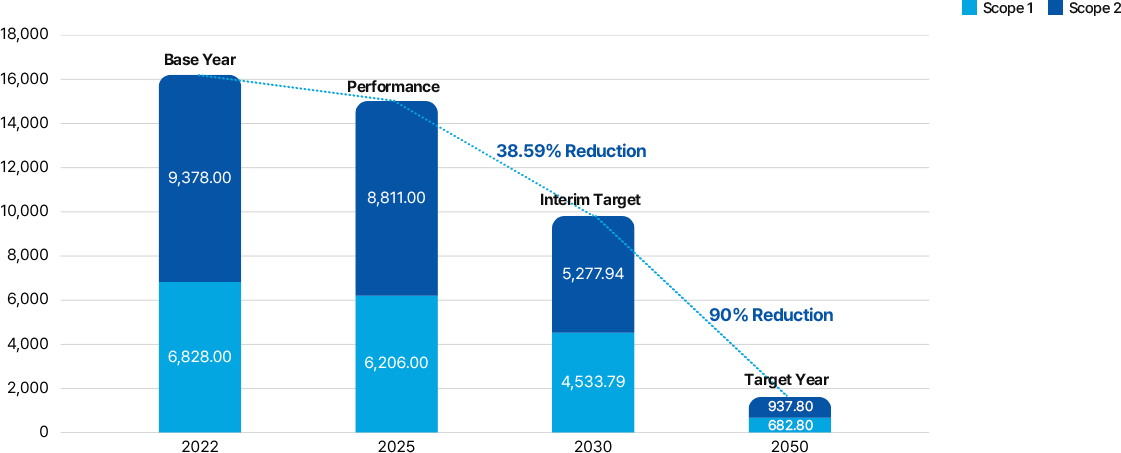
HL D&I Halla has set “Establishing Sustainable, Low-carbon, and Eco-friendly Worksites” as a strategic objective and developed a medium- to long-term roadmap to respond to climate change.
Climate Change Response Strategy and Roadmap
Climate-related Financial Impacts and Response Strategies
HL D&I Halla quantitatively analyzed the potential effects of major climate-related risks and opportunities on its business operations and financial performance.
Based on the analysis results, the Company identified the scale of potential financial impacts and corresponding response strategies for each physical risk, transition risk, and opportunity factor and incorporates these findings into its medium- to long-term climate change response strategy.
Participation in Environmental Initiatives
Since 2025, HL D&I Halla has participated in the Carbon Disclosure Project (CDP), a global initiative, to establish a climate-related disclosure framework and continuously strengthen transparent communication regarding its response to climate change.
In the first half of 2026, the Company received an A- Leadership rating in Water Security and a B Management rating in Climate Change, in recognition of the quality of its environmental disclosures and its response capabilities. These results demonstrate the Company’s robust environmental management capabilities.
In particular, HL D&I Halla received the Carbon Management Special Award, granted to top-performing first-time respondents in the Climate Change category, gaining external recognition for its climate change management capabilities.
Going forward, the Company will continue to advance detailed implementation at worksites, systematic greenhouse gas reduction, and water resource management activities.